


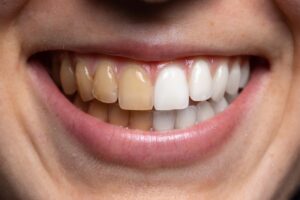
Tooth stains can develop for many reasons. One of the most common is the excessive consumption of dark-colored foods and beverages. Another is unhealthy habits, such as smoking and using other tobacco products. A factor you may not have considered, though, is genetics. Can discoloration be a family trait? Learn the truth and how your cosmetic dental team can help.
How Are Genetics Linked to Tooth Discoloration?
Not all tooth stains are the same. They vary in color and severity. While some may only appear on the surface and can be removed with brushing or professional teeth cleanings, others lie beneath the enamel and are more difficult to remove.
When it comes to genetic tooth discoloration, one of two conditions is likely to blame:
- Dentinogenesis imperfecta: This causes tooth enamel to appear gray, transparent, and weak.
- Amelogenesis imperfecta: This causes enamel to be fragile and appear yellow, brown, or a mixture of both.
Your family’s genes can dictate how thick your enamel is and its translucency. If your mother or father has yellow or grayish teeth, you are at increased risk of having them yourself.
Are There Ways to Combat Genetic Tooth Discoloration?
Since changing your diet to minimize exposure to dark-colored foods and beverages or giving up bad habits, like smoking, may not be the problem, treatment for genetic tooth discoloration is available.
Professional teeth whitening is an option your cosmetic dentist may recommend initially. They can administer in-office treatment or provide custom take-home trays and bleaching gel to remove stains.
If this does not appear to be a successful solution, alternatives include custom dental crowns and veneers. These unique restorations can conceal gray, yellow, or brown teeth and provide stable, long-lasting results. Instead of living with stains, your cosmetic dentist can apply restorative solutions to reveal a smile free of discoloration.
How Can You Maintain Whiter Results?
To keep genetic stains from appearing in the future, you will need to take proper precautions, such as:
- Brushing your teeth twice daily for two minutes with a soft-bristle toothbrush and fluoride toothpaste
- Flossing between teeth daily
- Rinsing with a dentist-approved mouthwash that promotes whiter smiles
- Seeking professional treatment for your restorations if you notice changes, including damage or stains forming
- Inquiring about teeth whitening touch-ups if initial treatment proves successful
- Visiting your dentist biannually for dental checkups and cleanings so they can closely monitor the health and appearance of your smile
Genetic tooth discoloration does not mean you must hide your smile for the rest of your life. Instead, it can be an opportunity to make a change, seek treatment, and enjoy a brighter set of teeth.
About the Author
Dr. Alison Fitzgerald’s 15 years of experience includes working closely with patients to develop tailor-made treatment plans that produce one-of-a-kind, life-changing results. After earning her dental doctorate at Creighton University, she pursued advanced coursework at some of the world’s leading teaching centers. As a cosmetic dentist, she offers a unique vision and has a keen eye for detail, helping patients embrace healthier, brighter smiles for life. If you are interested in learning about teeth whitening or other similar services, visit our website or call (520) 881–8902 to schedule a consultation.